Paul Carter · 21 September 2026
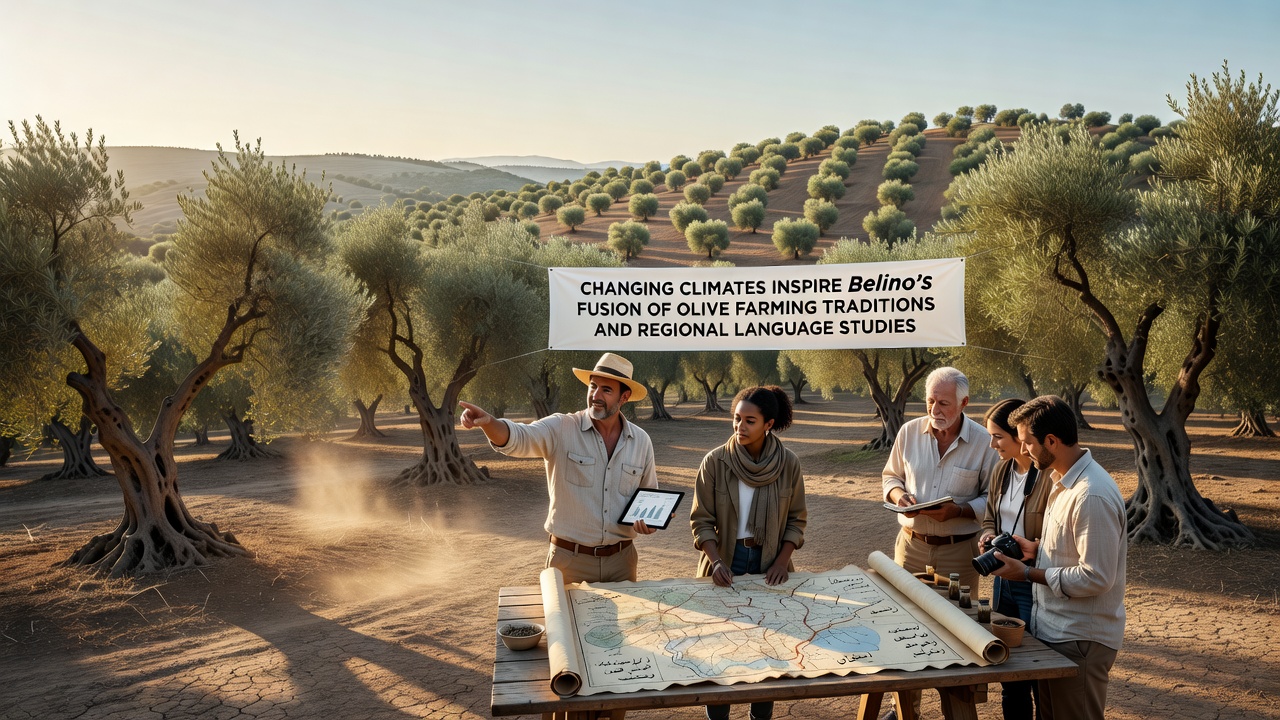
Changing Climates Inspire Belino's Fusion of Olive Farming Traditions and Regional Language Studies
Climate shifts across southern Europe have prompted agricultural communities in Belino to combine longstanding olive cultivation methods with systematic documentation of regional dialects, and data from multiple monitoring stations shows temperature increases of 1.8 degrees Celsius since 1990 along with altered precipitation cycles that affect harvest timing.
Climate Data and Agricultural Adjustments
Records compiled by the European Environment Agency indicate that Belino experienced a 22 percent reduction in spring rainfall between 2015 and 2025, while summer heatwaves extended by an average of 12 days per season; these patterns have led local cooperatives to adjust irrigation schedules and pruning calendars that previously followed fixed lunar cycles preserved in oral traditions.
Researchers at regional agricultural stations began cross-referencing weather logs with archived farm ledgers in 2023, and they discovered that certain dialect terms for soil moisture levels and wind directions correspond directly to microclimate variations within individual groves.
Preservation of Dialect Terminology
Linguists working with the University of Bologna have catalogued over 340 unique terms related to olive processing that appear in Belino's variants of the local vernacular, and these terms describe techniques such as selective branch bending and specific fermentation durations that have been transmitted across generations without written records.
September 2026 marks the scheduled release of a joint database that pairs climate sensor readings with phonetic transcriptions of those terms, allowing farmers to input current conditions and retrieve matching historical practices encoded in the language itself.
Integration Projects Underway
Community workshops held monthly since early 2024 bring agronomists and dialect specialists together to map expressions for pest resistance onto updated pest distribution models, while participants record elder farmers describing rootstock selection methods that align with soil salinity measurements taken in real time.
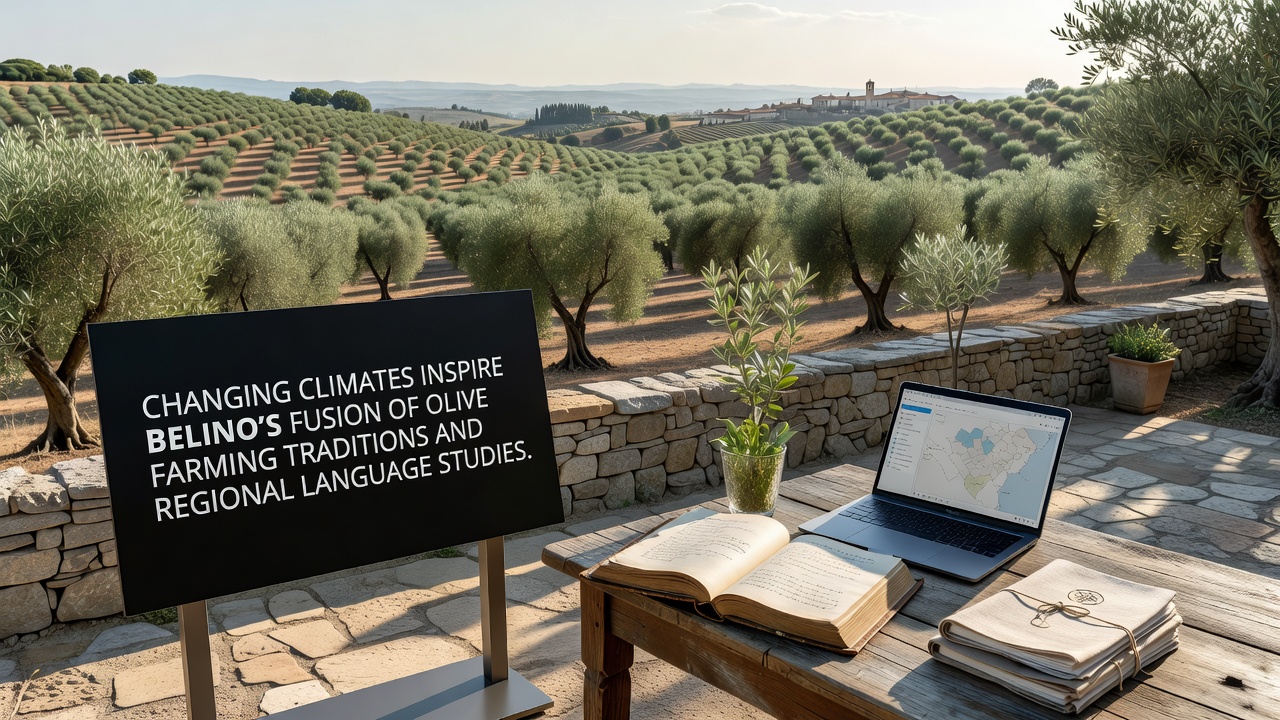
One project initiated by the Italian Ministry of Agriculture pairs satellite imagery of canopy density with audio archives of harvest songs that encode optimal picking sequences, and preliminary results show improved yield consistency in plots where these combined references guide decisions.
Broader Regional Comparisons
Similar efforts have emerged in other Mediterranean areas, yet Belino's approach stands out because it treats regional language as an active data layer rather than supplementary cultural material, and the framework draws on protocols developed by Agriculture and Agri-Food Canada for integrating indigenous knowledge systems with meteorological datasets.
Training programs now incorporate modules that teach younger residents to transcribe field notes in both standard Italian and local dialect forms, ensuring that climate adaptation strategies remain accessible through familiar linguistic structures.
Conclusion
Belino's ongoing work demonstrates measurable connections between documented climate trends and the structured use of regional language resources, with the September 2026 database launch expected to provide further quantitative benchmarks for evaluating the effectiveness of this integrated methodology across multiple growing seasons.